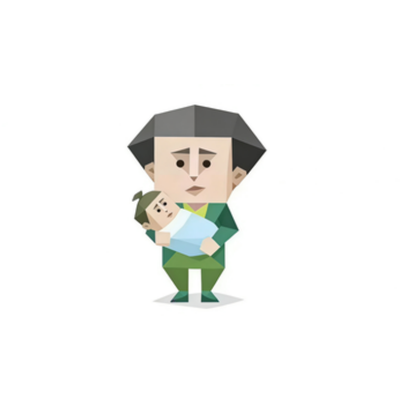
Maybe... can I call you mom...?
MUM — The Mom Friend: Complete SBTI Personality Guide
Mom's Letter — A Letter From Your Inner Mother
Sweetheart,
If you're reading this, you probably just took a personality test. The result says you're "The Mom Friend."
You might think that's funny. Maybe even a little insulting — "I'm in my twenties, how am I already the mom?"
But you know. Deep down, you already know.
When did it start? Probably earlier than you remember.
Someone was crying. You were the first one there with a tissue. Not because you're some kind of saint — okay, maybe a little — but because you physically cannot watch someone suffer and do nothing. What does it feel like? Like someone else's pain takes root in your body. They hurt a one; you feel a three. They haven't even said anything yet, and you already know what's wrong.
That's MUM's base code: Empathy isn't a setting you can toggle. It's always on.
Your core values run high (S3 high). You're naturally driven by something that matters. For MUM, that something isn't career advancement or changing the world — it's whether the people around you are okay. Self-esteem is moderate (S1 mid). Self-clarity is moderate (S2 mid). You have a general sense of who you are, but you're not fixated on it. Because most of your attention is pointed outward.
Are they hungry? Are they cold? Are they happy? Did that text have a weird undertone? Was their voice slightly different today?
There's a permanent background process running in your brain: "Status Tracker: Everyone Else." Your own status tracker? Boots up occasionally. Crashes often. Gets deprioritized because someone else's thing seems more urgent.
Emotionally, your attachment security is moderate (E1 mid), but emotional investment is very high (E2 high). What does that mean? It means once you've decided someone matters, you give them everything — full emotional bandwidth, no half-measures. But boundaries are low (E3 low). You cling easily. You let others cling to you. Emotional warmth in a relationship is oxygen.
This is MUM's warmest quality and most dangerous vulnerability: You give too much.
You probably don't see it that way. You'd say, "It's fine, I want to." You'd say, "Taking care of people makes me happy." You might even say, "I don't need anyone to take care of me." But honestly — you do. You're just not comfortable asking. Or you asked too many times and no one listened, so you stopped.
One of MUM's listed traits is "discounts themselves." This isn't modesty. It's habitual self-compression. Whatever someone needs, you provide. After providing, you wonder if you provided enough. Other people's needs always come first. Your needs? Filed under "I'll get to that after I'm done with everything else" — but "everything else" is never done.
Your worldview leans optimistic (A1 high). You prefer to believe in people. You prefer to believe in kindness. Rules flexibility is moderate (A2 mid). Sense of meaning is moderate (A3 mid). Put together: MUM isn't the type with a grand master plan for life. MUM's meaning comes from the present tense — whoever needs me right now, that's where I'll be.
Sounds noble? It's exhausting.
Because "who needs me" always has an answer. There's always someone. And you always respond.
Action drive is where MUM takes a hit. Motivation orientation is low (Ac1 low) — your default priority is avoiding harm, not chasing glory. Decision-making is moderate (Ac2 mid). Execution is moderate (Ac3 mid). You can get things done, but most of your energy goes to caring for others, and what's left for your own goals isn't enough.
When you're helping someone else decide, you're razor-sharp: "You should go for it." "You deserve better." "Don't settle." But when it's your turn? "I don't know... maybe later." "My thing isn't urgent." "Let me finish helping you first."
Every piece of advice you give others — you can't follow a single one yourself. Not because you don't know better. Because when it's your turn, "Mom Mode" automatically deprioritizes you to the bottom of the queue.
Socially, your initiative is very high (So1 high). You break the ice. You check in. You walk toward people without waiting to be invited. But boundaries are low (So2 low) — you let people in too quickly, and you go too deep too fast. Expression is direct (So3 low) — what you feel, you say. Especially concern. Especially care.
"Drink some water." "Get some sleep." "Don't skip breakfast." "It's cold, put a jacket on." You know these are cliches. You know some people find them annoying. But you can't stop. Because in MUM's operating system, not saying it feels like failing a duty of care.
Sweetheart, I know you're tired.
I know you've been taking care of everyone and almost nobody takes care of you. I know when you smile and say "I'm fine," you're not fine. I know the only time you let the armor down is alone, late at night, when there's finally no one left to take care of.
But I need to tell you something: you're not a superhero.
You're a person. A person who also needs to be cared for, worried about, and remembered.
So this letter is from your inner mother — which is to say, from you — to yourself.
Next time someone asks "are you okay?" — try telling the truth. Next time you want to help someone, ask yourself first: "Do I actually have the bandwidth right now?" Next time you feel like you don't matter, open this letter and read it again.
You matter.
Not because of who you take care of. Not because of what you're useful for.
Just you. Just as you are. You matter.
With love, MUM
Dimension Breakdown
High Emotional Investment + Low Boundaries (E2H + E3L): MUM's core engine. Full emotional commitment once someone is in the circle, with low boundaries making it easy to over-absorb others' emotions. This is the source of MUM's warmth and the source of MUM's burnout.
High Social Initiative + Low Boundaries + Direct Expression (So1H + So2L + So3L): Actively caring, actively approaching, saying what's felt without filtering. MUM's social mode *is* Mom Mode — don't wait to be asked, just show up. Don't read the room, just express concern. This makes MUM the warmest person in any friend group and the most easily drained.
High Core Values + Optimistic Worldview (S3H + A1H): MUM's caregiving isn't people-pleasing — it's a genuine belief that making others' lives better is worth doing. High core values fuel the giving; optimistic worldview sustains the belief that giving means something.
Low Action Drive (Ac1L) + Underperforming Self-Care Execution: MUM's energy allocation is fundamentally imbalanced. Advice for others: decisive and clear. Execution on their own behalf: chronically insufficient. This isn't a capability problem — it's a priority problem. Self is always last.
If You're a MUM
The thing you're worst at is taking care of yourself. So here's your new to-do list, item number one: Take care of yourself first. This isn't selfish — it's sustainable. A phone at 5% battery can't call anyone. Your warmth is a finite resource — it doesn't auto-refill; it needs active recharging. Learn to say "no." Not because you don't care, but because you care about too much and need a filter. Take all the advice you've given other people — "don't settle," "you deserve better," "take care of yourself first" — and say it again in the mirror. This time, you're the one who needs to hear it.
Dimension Analysis
Your confidence runs on vibes — soaring when things go well, deflating the second the wind changes.
You generally know who you are, but emotions can hijack the controls and make you feel like a different person for a while.
Goals, growth, or a deep conviction can light a fire under you pretty easily. You run on purpose.
Half trust, half testing — there's a constant tug-of-war going on inside you when it comes to love.
Once you decide someone's worth it, you go deep — full emotional bandwidth, no half-measures.
You cling easily and don't mind being clung to. Emotional warmth in a relationship is basically oxygen to you.
You lean toward believing in people and good intentions. When things go wrong, you don't rush to condemn the whole world.
You follow the rules when it makes sense and bend them when it doesn't. Pragmatic, not rigid.
Sometimes you have a goal, sometimes you just want to let it all rot. Your life philosophy is in standby mode.
Your risk-avoidance system boots up before your ambition does. Step one is always 'how do I not crash.'
You think it through but don't blue-screen. Normal, healthy hesitation.
You can get things done, but it depends on the mood. Sometimes steady, sometimes vibing.
You're happy to break the ice and work a room. Putting yourself out there doesn't scare you.
You crave closeness and merging. Once you vibe with someone, they get fast-tracked to the inner circle.
You say what's on your mind and don't bother sugarcoating it. Beating around the bush isn't your thing.
Compatibility

Related Types

Are you a MUM?
Take the SBTI personality test to find out your type.